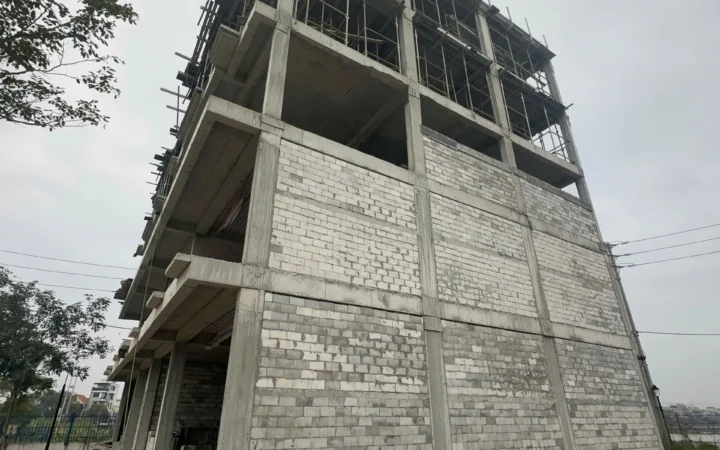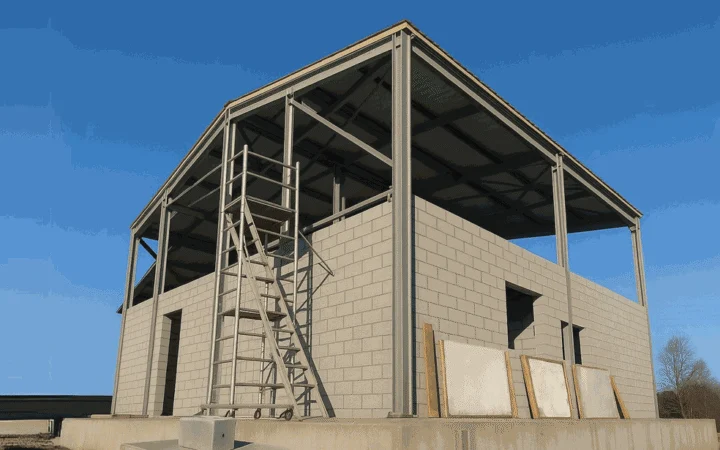



In the modern construction industry, how can a house be both cool in the summer and warm in the winter without consuming too much energy? The answer lies in foam concrete - a lightweight construction material, superior insulation and leading the trend of sustainable construction.
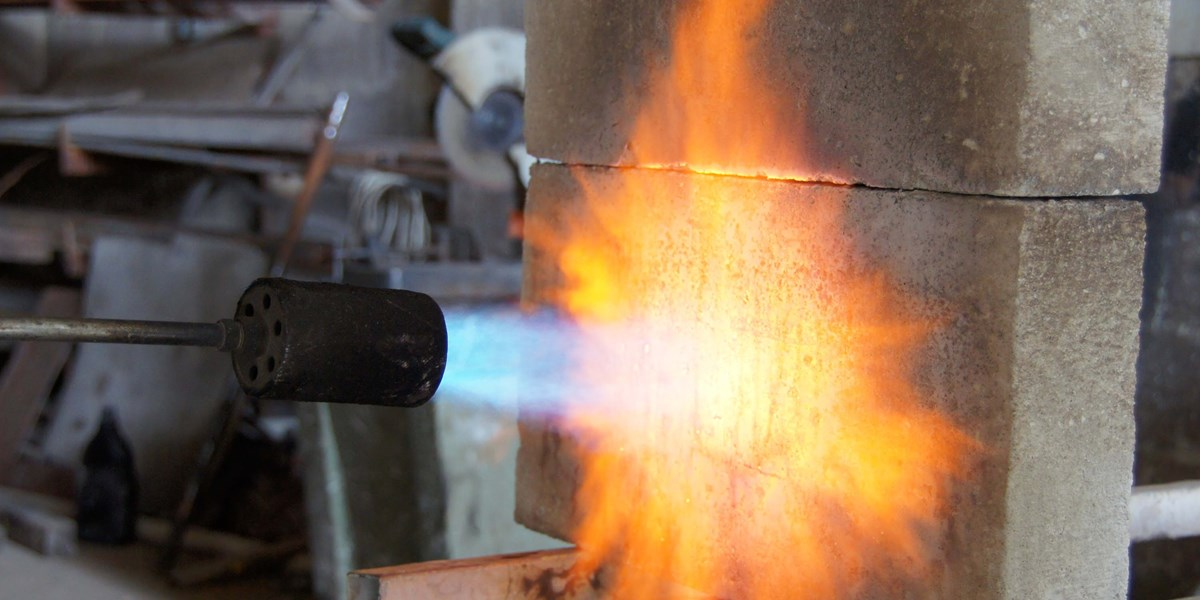
What is Foam Concrete and Why Is It Outstanding?
Foam concrete is a lightweight construction material produced by adding foaming agents to a cement mixture. Tiny air bubbles created inside help foam concrete become lighter and enhance heat retention. This material is not only easy to construct but also brings many benefits to modern projects.
Why is Foam Concrete so good at retaining heat?
Thanks to its special air bubble structure, foam concrete acts as a natural cushion, reducing heat transfer from the outside to the inside. This helps the interior space maintain a stable temperature, regardless of the weather outside.
- Energy saving: With a thermal conductivity of only 0.1 to 0.3 W/m·K (compared to regular concrete of 1.6 W/m·K), foam concrete helps significantly reduce the cost of air conditioning systems.
- Reality proves: A study at the National University of Singapore showed that buildings using foam concrete save up to 50% on cooling costs in tropical climates.
According to research from the Technical University of Munich, foam concrete has the ability to maintain a stable temperature inside a building, even when the outside temperature changes drastically. This creates a more comfortable living and working environment.
Thermal Insulation Benefits of Foam Concrete in Construction
1. House Walls Always Have a Stable Temperature
Foam concrete is often used for exterior walls, helping to keep internal temperatures stable. Thanks to that, summer is cool and winter is warm.
Actual project: A housing complex in Dubai has applied foam concrete to the exterior walls, helping to reduce internal temperatures by up to 25%, while saving on air conditioning costs.
2. Roof Insulation
The roof is the place that suffers the most from heat. Using foam concrete as insulation for the roof not only helps reduce heat but also reduces the load on the structure.
Research data: A study in the journal Journal of Building Engineering shows that foam concrete used in roof insulation reduces indoor temperature fluctuations by up to 30%, increasing energy efficiency.
3. Floor Application
In places with high ground temperatures or freezing cold, a layer of foam concrete under the floor will help create maximum comfort without the need for constant heating or cooling equipment.
Conclude
Foam concrete is not only a common construction material, but also an effective insulation solution, helping to save energy and create a more comfortable living space. With flexible application capabilities from walls, roofs to floors, foam concrete is the key to building modern, sustainable buildings.